Revenge is merciless yet vocally thrilling in Lyric Opera’s “Medea”
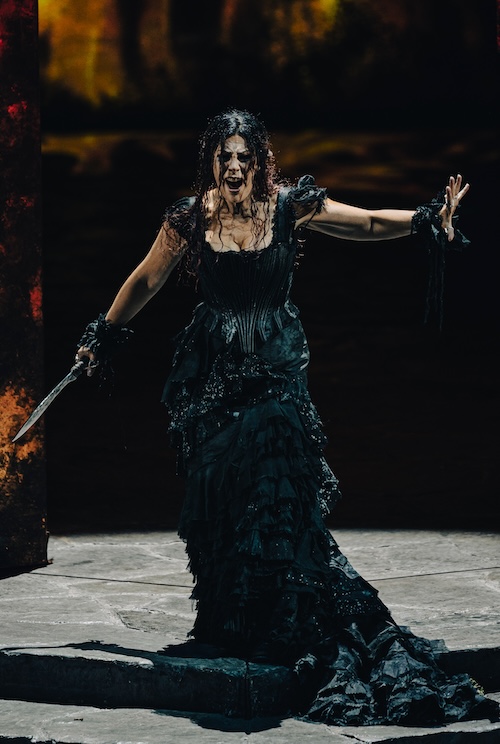
And you think your ex is crazy.
How about a divorced first wife who fatally poisons your bride at the wedding, murders both of your children, and then burns everything to the ground?
Such are the frolicsome events of Luigi Cherubini’s Medea, which had its way-belated Chicago debut Saturday night at Lyric Opera—228 years after its premiere—to open the company’s 71st season.
Greeted at its 1797 Paris premiere with bewildered disdain, Médée drew favor from musical cognoscenti at subsequent appearances in Rome and Vienna—including Beethoven who proclaimed the opera a masterpiece. Yet after that, the opera vanished from public view for a century. Medea wasn’t performed at La Scala until 1909 and its American debut didn’t take place until 1956 and then only in a concert presentation. Aided enormously by memorable performances and recordings by Maria Callas, the opera eventually worked its way into more regular stage appearances.
So, is Medea one of the most unjustly “lost” operas in the repertory or deserving of its long neglect?
Cherubini’s uncomedic opéra-comique has undeniable issues, even apart from its textual complications. (Originally presented in French with spoken dialogue, Lyric has elected to do Medea is its now-standard Italian version with recitatives.)
The opera’s main problems are a static dramaturgy and cardboard characters with little depth or complexity, apart from the homicidal title anti-heroine. The other major hurdle is that there are few sopranos around that can tackle the daunting vocal requirements as well as the dramatic demands of the vengeful title character, who breaks in on the impending nuptials of her former husband Jason in Corinth to lay waste to his new bride and family.
Yet Medea’s virtues are considerable, from the magnificent Overture to the expansive arias and duets for the two lead characters, and, arguably, the greatest final scene for a dramatic soprano in all opera. Cherubini paints Medea‘s tortured psychological state and schizoid mood-changes with almost clinical acuity and in a way that feels startlingly modern for an opera written in 1797.
Lyric Opera has so often been content to coast on mediocrity (and worse) in recent years, that it felt almost foreign Saturday night to have two genuine stars in the opera’s major roles for this important company premiere.
Sondra Radvanovsky has sung the role of Medea to acclaim at the Met and elsewhere. The celebrated soprano brought the requisite vocal power as well as scary dramatic intensity to the role of the title sorceress who is abandoned by her husband Jason (Giasone) and vows to wreak havoc on all.
With her bedraggled hair, Radvanovsky’s Medea was often a pitiable figure in the first two acts, crawling on the ground in pleading supplication for Giasone to return to her. She sang with tenderness in her Act I duet with Jason and retrospective moments recalling their past happy times. Yet when Medea goes full sorceress, the soprano brought jarring intensity to her vows of vengeance.
The role of Medea is one of the great voice-shredders, yet Radvanovsky rose to the daunting challenge of the final act, which is essentially an unbroken 35-minute mad scene. The soprano tackled all the formidable challenges, flinging out the leaping top notes, handling the bursts of rapid vocalism and making Medea’s frenzied indecision about whether to not to murder her children to get revenge on Giasone nerve-wracking and harrowing. A memorable, genuinely great performance by a singer at the peak of her career.
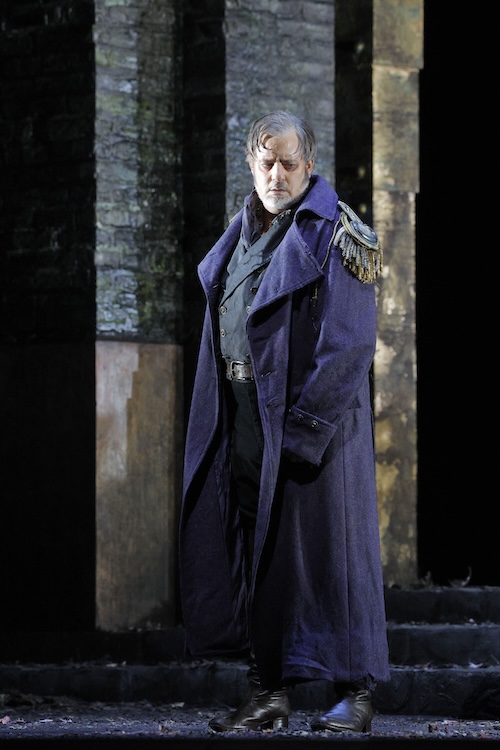
Matthew Polenzani as Giasone sounded somewhat dry toned in the early going opening night but soon warmed up, proving that at age 57, the Evanston native’s instrument remains in estimable vocal shape. In addition to his credible acting, Polenzani brought heroic vocal strength and flexibility, singing a plangent “Or che più non vedrò.” The tenor was vehement in his conflicted confrontations with Medea, and delivered clarion top notes in the climactic moments of the latter acts.
Making her Lyric Opera debut as Glauce, Jason’s ill-fated bride, was Elena Villalón. Sadly, the young Cuban-American soprano sounded vocally outclassed in this fast company. While she acted competently—as much as one can tell from 20 rows back—and showed agility in her Act I aria, Villalón’s soprano sounded lightweight and shallow of tone, lacking the kind of warmth and richness the part calls for.
As King Créonte, father of Glauce, Alfred Walker was a sturdy figure in this humdrum authority role, bringing a weighty bass-baritone to the table and singing with force and impact in his denunciations of Medea.
Zoie Reams proved luxury vocal casting as Néris, Medea’s loyal yet humane servant. The small role gets one of the finest arias in the opera, and Reams delivered a moving “Solo un pianto con te versare,” with sable, darkly resplendent tone, supported with an eloquent bassoon solo by principal Preman Tilson.
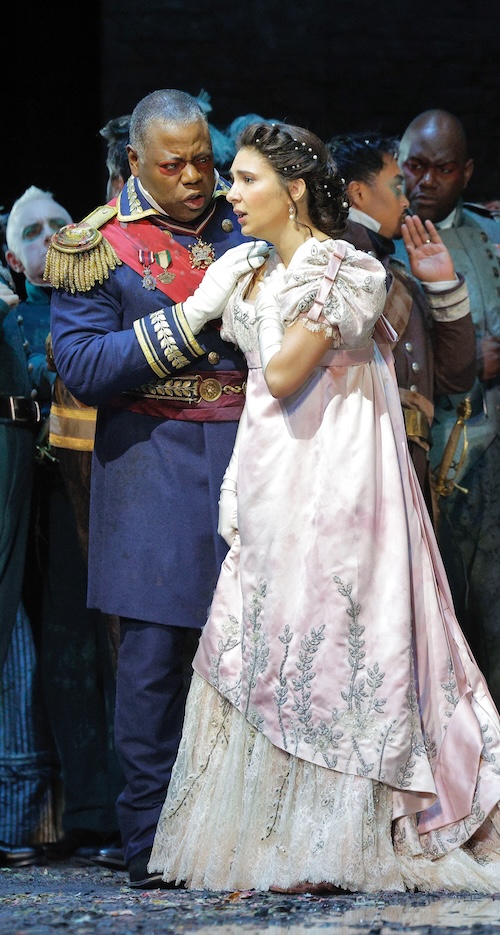
David McVicar’s staging, a co-production with the Met, is characteristic in its dark and moody minimalism. The bare stage and low steps are set off by a towering lacquer wall, which opens to the haven of Corinth but leaves Medea outside, making visually manifest her outcast status. The most striking scenic element is a massive, tilted mirror at the back of the set, that offers a distorted overhead view of the stage action, nicely reflecting the sorceress’s disordered psyche.
Following the most leaden opening-night National Anthem in memory, Enrique Mazzola led a similarly tepid performance of the Overture, lacking in weight and drama.
After that Lyric Opera’s music director was attentive to the score with alert balancing and the performance grew more energized as the opera continued. But, overall, there was a crucial lack of orchestral fire at climaxes under Mazzola with such combustible peaks as Medea and Giasone’s scene at the end of Act II and the climatic finale lacking the whipcrack intensity the music demands.
The chorus looked light in numbers, but sang with serviceable strength and responsiveness in the wedding scene and anguished finale.
Medea remains a remarkable and, in some ways, unique opera. Even with the noted reservations, Lyric Opera has provided the requisite star power that Cherubini’s opus requires, and aficionados should snap up a ticket for one of the five remaining performances.
Medea runs through October 26. lyricopera.org
Posted in Uncategorized
One Response to “Revenge is merciless yet vocally thrilling in Lyric Opera’s “Medea””
Leave a Comment

 Subscribe via RSS.
Posted Oct 24, 2025 at 2:14 pm by Caryn Green
Much in agreement. Excellent review that acknowledges the issues of the piece itself while honoring the deserving performances.
Having found the narrative plodding and casting a little thin while highly admiring the vocal virtuosity of the principals, I’m pleased to see confirmation of my perceptions by an authority.