Worthy new works win out over voluminous words at Sinfonietta’s MLK program
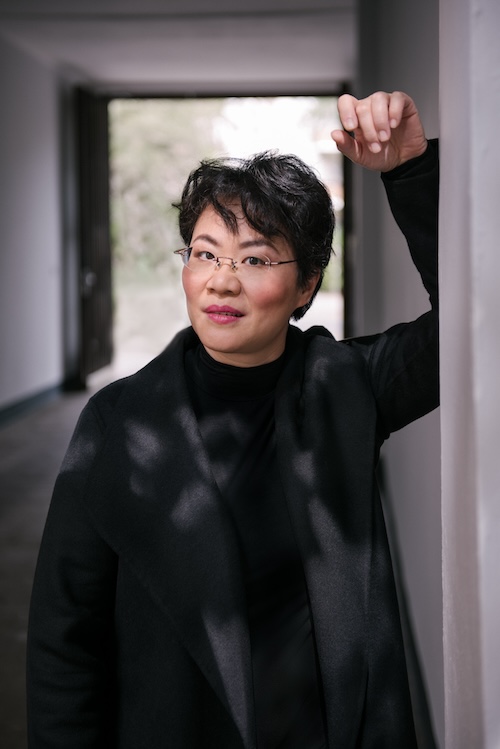
Attending orchestral concerts can sometimes be an impersonal experience. In the standard procedure, members of the audience interact with the performers only by applauding, and certainly not with one another.
Not so with the Chicago Sinfonietta. The city’s most diverse orchestra—with audience to match—cultivates a more communicative atmosphere, with plenty of direct address (too much, at times) from the stage and a sense that being present is essential to the experience. It’s not just a show that you could consume equally well from a screen. There’s the music, and there’s also building good feeling with one’s fellow humans.
The Sinfonietta’s long-standing tradition around Martin Luther King Day is to program concerts that honor King’s legacy, and the achievements of black Americans more broadly. This year’s program, titled “Open Heart,” was performed on King Day itself at the Auditorium Theatre, to a happy, grateful crowd braving frigid weather.
Five different people addressed the audience before the first note was played. Board chair Wendy Lewis introduced the concert and explained the dual significance of its title. “Open Heart” metaphorically refers to acceptance of difference as preached by King, and literally to Dr. Daniel Hale Williams, the pioneering black surgeon who performed the first successful open-heart procedure in Chicago in 1893. The audience then heard from bassist Christian Dillingham, music director Mei-Ann Chen, cellist Edward Kelsey Moore, Chen again, and composer Kathryn Bostic. Only then did the music begin.
The opening piece was the world premiere of Bostic’s orchestral suite arranged from her score to the movie The Supremes at Earl’s All-You-Can-Eat. The movie adapts the novel by Moore, who noted in his remarks that probably no one else in the world was having the experience he was having, playing in a live performance of music composed for a story he wrote.
One of the main characters in the book and movie is a pianist, so that instrument, played by George Radosavljevic, features prominently in the piece. At times, it felt like the orchestra was accompanying the piano, but not with the virtuosity of a concerto—more like orchestral concertante where the featured instrument dominates the texture.
The tonal, triadic sound-world of the suite suggested that a main challenge for Bostic in arranging the film score for live performance was to present the material in a way that it would stand up to the closer scrutiny of a concert. Rich white-note harmonies and suspensions can take you only so far. The best decision she made in managing the audience’s attention was to end the suite with her song “State of Grace,” which she sang herself. Her soulful voice—not to mention her facility with the microphone—made for a winning, hummable finish, even if requiring a singer might will make it hard for the piece to get a second performance.
The atmosphere shifted sharply with the ensuing work breathe/burn: an elegy, a seven-minute piece by Joel Thompson dedicated to the memory of Breonna Taylor, who was killed by the Louisville police in 2020. The Sinfonietta commissioned the piece that year, but had to wait to perform it live in this Covid-delayed local premiere.
The piece is a mini-concerto of sorts, with a solo cello driving the music. Jeffrey Zeigler, wearing an untucked, patterned button-down, opened the work with an emotional, energetic solo. The music swerved back and forth between the solo cello and the orchestra, always returning to a keening, tragic sound. Activity from a snare drum or rapid triplet figures would perk up the texture, then the plangent cello would return to prominence. breathe/burn is a powerful, beautiful piece.
Zeigler spoke to the crowd after the Thompson piece to introduce his encore, a duet with Sinfonietta principal cello Lindsey Sharpe. Salumba by the Gambian kora master Foday Musa Suso had a soothing, mesmerizing quality in its back and forth, where one cellist would solo while the other played an ostinato, evoking the unique sound of the 21-string West African instrument.
Chen introduced Dvořák’s “New World” Symphony (No. 9) by noting that the composer’s assistant while working in the United States, Harry T. Burleigh, introduced him to the sound of American spirituals and folk songs, which Dvořák drew on in his symphony.
The Sinfonietta played Dvořák’s popular symphony more than competently, but with somewhat less electricity than the works in the first half. The opening movement was nicely balanced and intelligently phrased. What it lacked was a sense of conversation, where the theme ping-pongs between sections and the listener would ideally like a stronger sense of give and take.
Between the first and second movements, Chen welcomed the choir of the Apostolic Church of God to the front of the stage. They sang “In Bright Mansions Above” a cappella, directed by Richard Nunley, then exited. While it served to emphasize the origins and spiritual-adjacent quality of the melody, placing it between movements proved decidedly odd and jarring.
The rest of the symphony followed the pattern set by the first with some lovely individual moments, especially Amy Velzo’s English horn solo in the famous Largo. But the performance failed to ignite, with insufficient dynamic and textural contrast and an overall lack of punch and intensity.
The concert ended with a tradition established by the orchestra’s founder, Paul Freeman. The Apostolic Church of God choir returned, to lead the audience in singing “We Shall Overcome.” Chen asked the audience to hold hands. Chatter while leaving the hall showed that the concertgoers felt moved by the communal ritual, just as Freeman, the Sinfonietta, and King would all hope for.
The Chicago Sinfonietta’s next program features Amy Beach’s Gaelic Symphony, Marianna Martines’ Sinfonia in C major, Florence Price’s Dances in the Canebrakes and the world premiere of Shirley J. Thompson’s Seventh Sense: Incidents in the Life of Queen Amanirenas. The latter two works will be performed in collaboration with the Deeply Rooted Dance Theater. Concerts are 7 p.m. March 6 at Wentz Concert Hall in Naperville and 7 p.m. March 7 at the Harris Theater. chicagosinfonietta.org
Posted in Uncategorized
Leave a Comment

 Subscribe via RSS.