Newberry Consort engagingly explores music & machines of the Renaissance
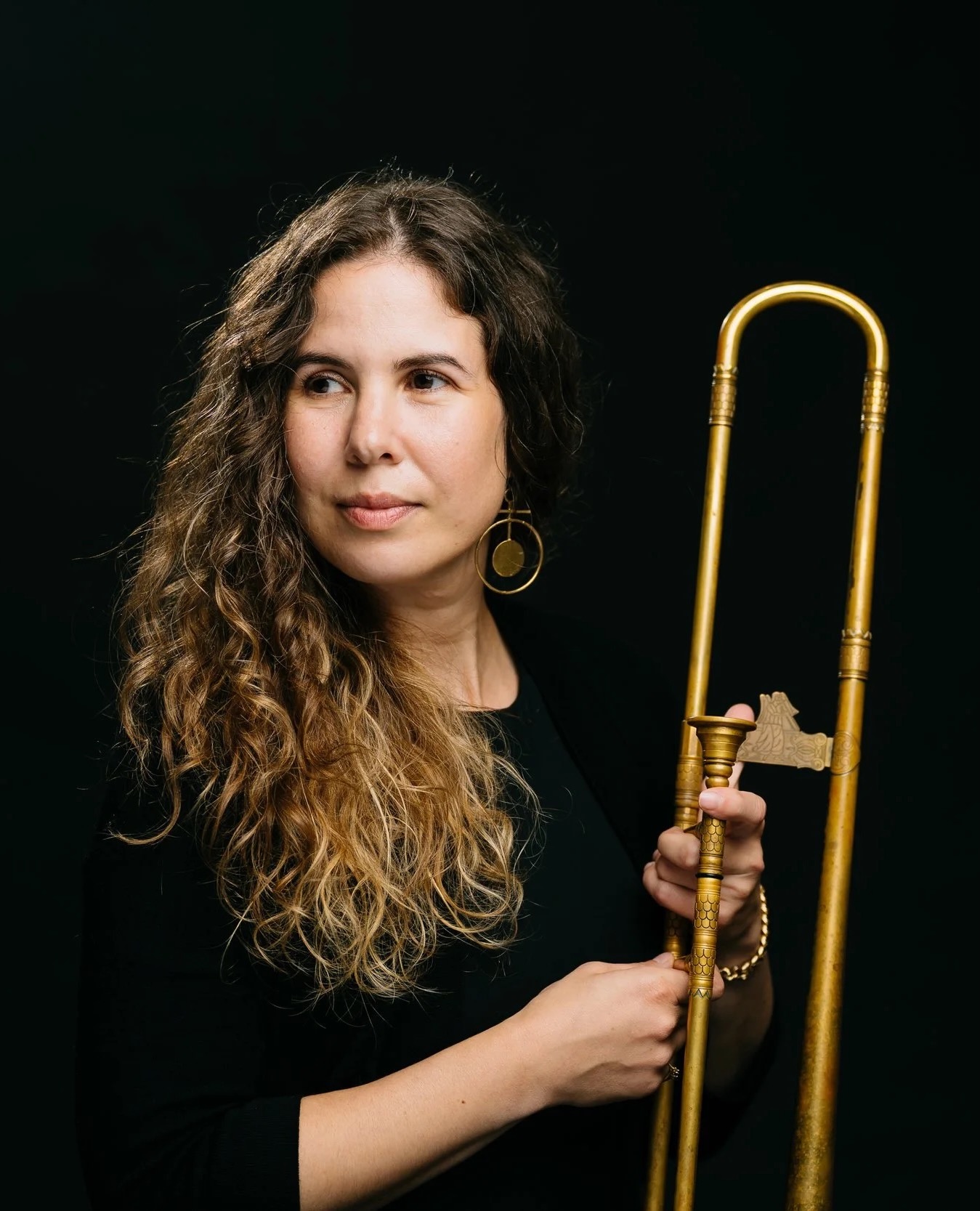
Concert programming is a subtle and often elusive art and no music organization in Chicago does it better than the Newberry Consort. Such has been the case from the organization’s beginnings, and since Liza Malamut assumed the helm as artistic director of the early-music ensemble in 2022, she has taken Newberry’s programs to fresh heights.
Malamut’s thoughtful, sometimes quirky, programs seamlessly blend music and history in explorations that are as scrupulously researched as they are intellectually illuminating and musically satisfying.
Such was the case once again Friday night at the University of Chicago’s Bond Chapel with “Corkscrews, Coils and Clocks,” the Newberry’s current program, which runs through Sunday at different locations.
The program is centered on the early Renaissance of the 15th and 16th centuries—the era of Leonardo da Vinci and a time for extraordinary advancements in science and invention with the creation of the printing press, mechanical clocks, and numerous machines and new technologies.
As Malamut pointed out in her informative, stylishly written program note—and verbal introductions—it was also a time of great advances in musical composition and the development of instruments.
That fast-moving evolution was reflected in a program that efficiently covered nearly two-dozen composers (many obscure), performed by ten musicians (six versatile instrumentalists and four singers). Reflecting the era’s developing changes, as the evening unfolded shawms were succeeded by recorders and the sackbut gave way to the slide trumpet and trombone.
Music of Franchino Gaffurio began the concert in lively fashion. The quasi-continuo of hurdy-gurdy (Mary Vanhoozer) and lute (Daniel Zanuttini-Frank) started the toe-tapping “Musices septemque modos Planetae,” which soon segued into a spirited collaboration for the full ensemble.
Gilles Binchois’ “Virgo rosa” was a worthy vehicle for the vocal quartet with soprano Camila Parias’s clear, bell-like tone serving the music exceptionally well, anchored securely at the low end by bass Ian R. Prichard.
The pillars of the program were four masterful motets that showed the growing complexity and depth of the developing Renaissance styles. In Ockeghem’s Alma redemptoris mater Parias again impressed with her handling of the wide-ranging, stratospheric soprano part while Prichard’s warmly rounded bass seemed to aurally suggest the spiritual comfort of the words.
Of the other motets, Dufay’s Nuper rosarum flores felt vocally uneven with Parias again a standout in music that seemed to need greater ensemble polish and vocal brilliance. So too with Antoine Busnoys’ fascinating In hydraulis, which was positioned as the big finish of the first half. Despite the advertised thrills of the music accelerating and jumping harmonic and rhythmic intervals, Friday’s performance felt cautious and proved earthbound with little of the excitement or spectacle promised by the notes.
Nymphes des bois by Josquin des Prez, the final pillar, provided the high point of the evening. Josquin’s remarkable lament for the death of Ockeghem was beautifully sung and played, movingly conveying the valedictory expression of its elevated inspiration as well as nicely bringing the program full circle.
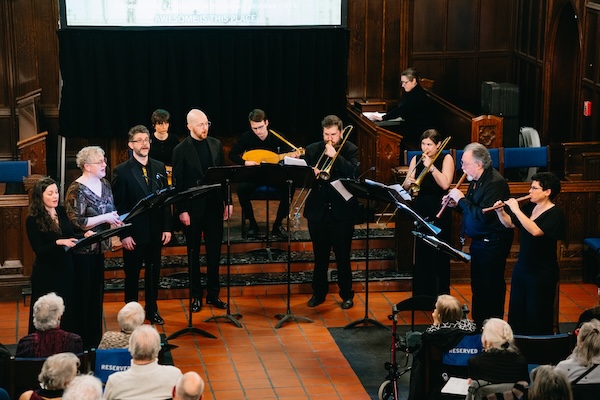
Also inspired was Pierre de la Rue’s Fors seulement. In this French chanson, the singers sensitively conveyed the sweet sorrow of the setting as Malamut’s dark-toned slide trumpet accented the melancholy.
Maybe it’s the approaching Saint Patrick’s Day and/or one’s Celtic genes, but some of the lively dances sounded decidedly Irish and jig-like in character—especially Petit vriens by Pesaro and Piva by Joan Ambrosio Dalza.
As always, Shawn Keener’s well-selected projections of contemporary prints and artwork provided a graceful and educational visual counterpoint to the music. One quibble: the white-font captions proved fitfully unreadable against some of the lighter backgrounds.
The program will be repeated 4 p.m. Saturday at Saint Luke’s Episcopal Church in Evanston, 4 p.m. Sunday at Ganz Hall, and 6:30 p.m. March 17 at Kansas State University in Manhattan, KS. newberryconsort.org
Posted in Performances
Leave a Comment

 Subscribe via RSS.