Canellakis, CSO bring fresh brilliance to populist program
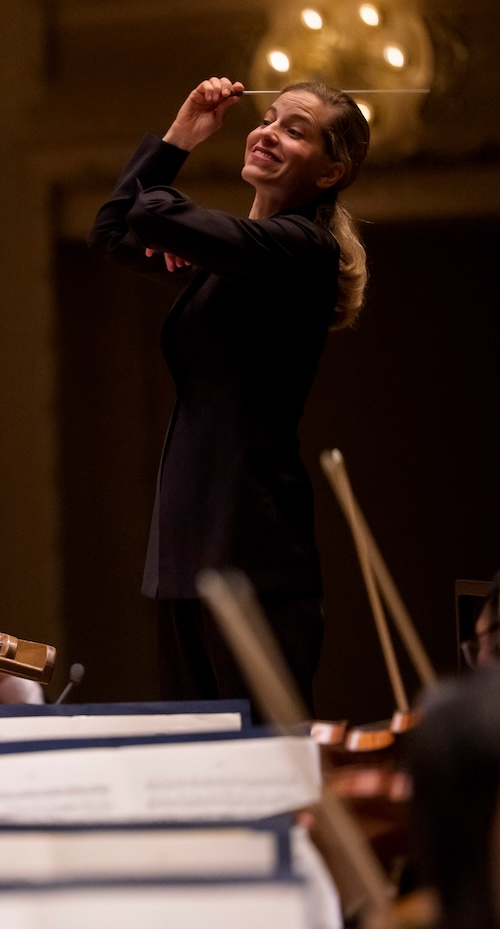
Since making an impressive Chicago Symphony Orchestra debut in 2022—with Strauss’s Ein Heldenleben, no less—and returning for an admirable sophomore stand last season, Karina Canellakis is becoming one of the most consistently rewarding and welcome of CSO podium guests.
So it proved again Thursday night with the American conductor leading a mainstream Romantic program in which she once again drew inspired, often exhilarating, results.
Dvořák’s Scherzo capriccioso led off the evening. This 12-minute work encapsulizes the Czech composer’s high-contrast appeal, the lively calliope-like main theme alternating with more pensive variants.
Canellakis led the CSO in a spirited reading, freely flexible with tempos but keeping fine momentum in a work that needs a firm hand on the tiller. The performance benefited from worthy horn playing and expressive woodwind solos, the latter underlining the darker undercurrents of the piece.
Conrad Tao was solo protagonist in the evening’s centerpiece, Béla Bartók’s Piano Concerto No. 3. In this penultimate work, the seriously ill composer seems to reconcile his previously explosive piano style within more traditional concerto form, the music often imbued with a palpable sense of leave-taking. (The middle movement is marked “Adagio religioso.”)
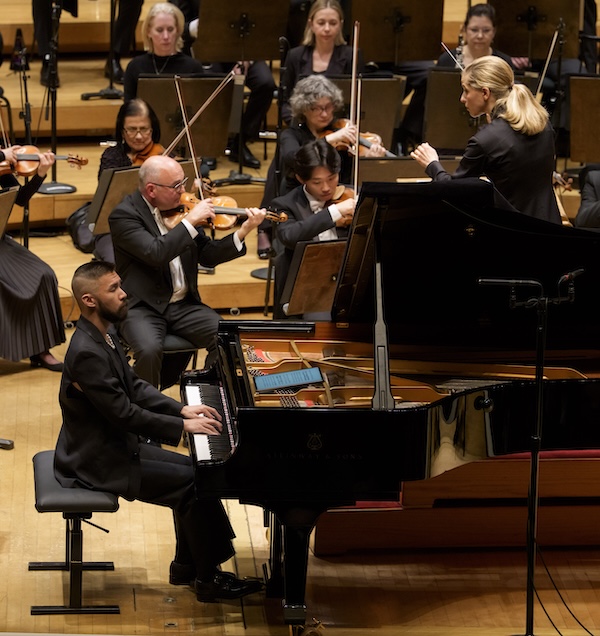
Tao proved a superb exponent of this music, his quicksilver style and leonine power in the framing movements wholly in synch with the composer’s late keyboard idiom.
Canellakis distilled a rapt, glowing serenity from the CSO strings in the opening of the middle movement, the rarefied expression not quite equaled by Tao in his more plaintive solo entrance. The pianist proved more in synch with the eerie middle section of the movement—Bartok’s final “nachtmusik” inspiration—building to a stark and punchy climax, before the music ends in a reprise of the spiritual opening.
Tao was fully up to the demands of the finale, bringing a hard-edged, bristling virtuosity to the score and working up to a thrilling conclusion with Canellakis and the orchestra delivering equally intense, full-tilt support.
Tao provided a bonus with an encore of the middle section (“Mouvement de menuet”) from Ravel’s Sonatine—plain-spun in the slow-waltz opening but building effectively to the more impassioned conclusion.
The evening concluded with Tchaikovsky’s not unfamiliar Symphony No. 5.
Jaded concert veterans may sigh at yet another revival of this warhorse but there are good reasons why such melodic and accessible works become warhorses in the first place.
And the fiery, combustible performance served up by Canellakis and the CSO Thursday night was just the kind of uncommonly fresh rendering to remind one why this score remains so beloved.
The performance also served to demonstrated the conductor’s estimable podium qualities: textural transparency and acute balancing, well-chosen tempos throughout with a dash of idiosyncrasy, and a strong grasp of dramatic pacing.
Canellakis took the lugubrious opening bars at a spacious tempo that immediately drew attention for the expressive concentration and the clarinets’ rich-voiced intoning of the symphony’s motto theme. Elsewhere the conductor leaned on fleet tempos in the modern manner yet consistently brought out the lyrical warmth of Tchaikovsky’s music. She built the drama and development of the opening movement surely, imbued with a nervy energy, to a thunderous climax.
The only blot on the performance came in the Andante with a lackluster, spindly-toned horn solo by the CSO principal (and more mediocre-to-weak playing in the following movements). That apart, Canellakis judged the Andante’s ebb and flow with idiomatic skill. The ensuing waltz movement was vivacious without any loss of balletic grace.
Tchaikovsky came to have doubts about his Fifth Symphony, believing the transformation of the bleak motto theme into a triumphal march in the finale was too facile. Yet the arduous musical struggle from minor-key tragedy to major-key triumph proved hugely compelling and exciting for all its familiarity. The energized playing and inexorable momentum paid off with Canellakis building the musical drama to a resounding and emphatic victory at the coda.
There was superb playing from the orchestra across all sections except where noted. The freedom and imagination of principal Stephen Williamson continues to make every clarinet solo something to treasure.
As Canellakis noted in a brief introduction, these concerts are being dedicated to Michael Tilson Thomas—an inspirational conductor and longtime CSO guest, who passed away April 22, age 81.
The program will be repeated 1:30 p.m. Friday, 7:30 p.m. Saturday, and 3 p.m. Sunday. cso.org
Posted in Uncategorized
2 Responses to “Canellakis, CSO bring fresh brilliance to populist program ”
Leave a Comment

 Subscribe via RSS.
Posted May 02, 2026 at 9:30 am by Stickles
Thursday night Tao was still rehearsing on stage just one hour before curtain. That level of meticulous preparation created one of the most sublime performances of a concerto.
Canellakis has proven again she is one of the most exciting musicians working today, often coming up with original yet sincere interpretations of the classics. As long as we have annual visits from her and Hrusa, many will be happy.
Posted May 02, 2026 at 1:53 pm by PRyan
Outstanding performances all around. The Tchaikovsky #5 is my favorite. First time I walked into Orchestra Hall–a long time ago–Georg Solti was conducting.
The symphony remains very special to me and started a long relationship with the best orchestra in the world, the CSO.