DiDonato brings rich, affecting vocalism to Lieberson cycle with CSO
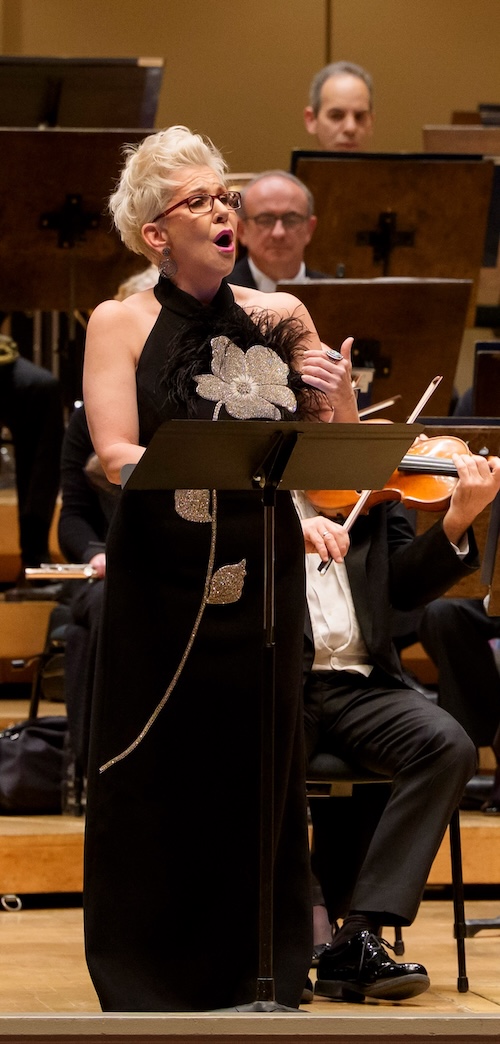
Joyce DiDonato has had a month.
After starring to wide acclaim in Kaija Saariaho’s final opera Innocence at the Metropolitan Opera, the celebrated mezzo-soprano provided the artistic highlight of Tuesday night’s star-studded Carnegie Hall gala before returning here to perform Peter Lieberson’s Neruda Songs with the Chicago Symphony Orchestra on Thursday.
This week’s concerts mark the final and most substantive of the singer’s three events as the CSO’s artist in residence this season. Conductor Edward Gardner led the Anglo-American program Thursday night.
The Neruda Songs is one of those works that seem inextricably bound to the circumstances of its creation. Lieberson’s song cycle was written for his wife, the mezzo-soprano Lorraine Hunt Lieberson. She was diagnosed with cancer while her husband was completing the work yet was able to premiere Neruda Songs in 2005, performing it three times (and recording it) before passing away the following year. The composer himself would die, also from cancer, just five years later.
Yet all works of art must live in the present and DiDonato’s moving performance Thursday night was fully in the expressive tradition of her late colleague.
Drawing on love poems by Pablo Neruda, the five songs tell of a couple’s deep bond while also marking an inevitable sense of time passing and the innate impermanence of all things—except the soloist’s love for their beloved. The composer is acutely responsive to the Chilean poet’s allusive style. And while Lieberson’s five songs are all slow, the settings are subtly varied in tempo and expression. The cycle is imbued with a sense of leave-taking and scored for orchestra with consummate mastery and subtlety.
DiDonato proved ideally suited to Neruda Songs both vocally and stylistically. Her rich, refulgent tone and finely calibrated expression caressed Lieberson’s flowing, rhapsodic stanzas. The singer brought out the individual contour of each setting naturally without special pleading, as in the repeated “muriendo” at the end of the third setting. In the final song, “Amor mio, si muero y tu no mueres” (“My love, if I die and you don’t”), DiDonato movingly conveyed the sense of a love that continues even after death in Lieberson’s achingly beautiful setting.
Gardner and the orchestra provided a simpatico accompaniment with mostly sensitive instrumental solos that supported their star soloist. The British conductor gave Lieberson’s big moments full symphonic scale yet dexterously balanced the large forces, always allowing his soloist to be heard clearly and effectively. Too bad some clap-happy audience members had to break the spell by applauding immediately after the hushed final notes rather than allowing the music to hang in the air.
Samuel Barber’s First Essay for Orchestra made a suitable prelude for the Lieberson cycle, its somber melancholy setting the table for the songs’ romantic introspection. The best of Barber’s three short works with the same title, the First Essay explores an elegiac expression similar to the American composer’s Adagio for Strings in a tight and skillfully crafted nine minutes.
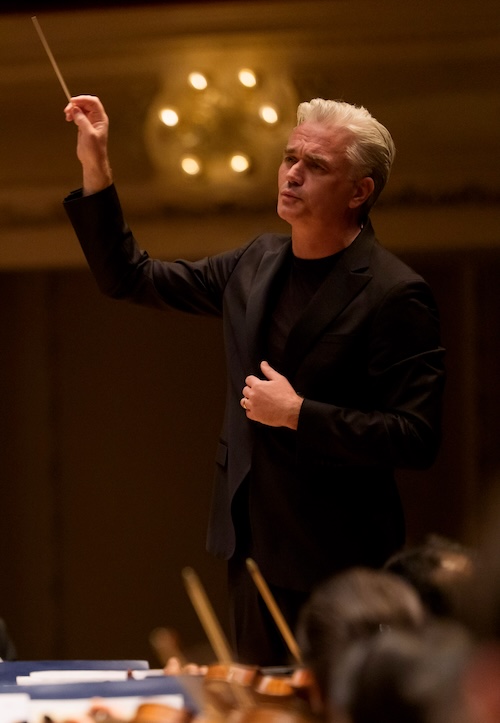
Gardner likewise proved a fine guide in this music, effectively contrasting the ruminative main theme with the scherzo-like middle section. He drew playing of fine clarity with pinpoint articulation in the ensuing fugue, which Gardner built to a forceful climax, before closing in a reprise of the lamentory opening theme. It’s astounding to read that this was the CSO’s first performance of this finely chiseled Barber gem on its home stage in 65 years.
The evening closed with William Walton’s Symphony No. 1. The first of the English composer’s two symphonies is not as deep and expressive as the symphonies of Edward Elgar nor as endearing and individual as those of Ralph Vaughan Williams.
But Walton’s First Symphony is a strong, dynamic and honest work even with its occasional ramshackle qualities. Gardner directed a forceful and impassioned performance Thursday night that belied the fact that the CSO musicians haven’t played this music in 13 years.
Gardner maintained a tempering balance in the restless, rugged propulsion of the long opening movement. While the conductor avoided peaking too soon—Walton’s blistering energy can be a bit relentless—he built the movement to a powerful hammering climax. (Timpanist David Herbert was excellent throughout.)
The briefer middle sections were well contrasted, though the scherzo-like second movement, while rhythmically incisive, lacked the requested venom (“Presto, con malizia”). The ensuing slow movement provided a respite from Walton’s nervy angst, with Emma Gerstein’s opening flute solo bestowing a welcome cooling balm.
The clouds of this dark and driven work disperse in the striding, optimistic energy of the finale with its quasi-nautical main theme. The musicians were at their finest here—not least in the dizzying brassy fugue—and while Walton’s garrulous finale has more endings than Symphonia domestica, Gardner and the orchestra delivered such an engaging and exuberant performance that it was hard to complain.
The program will be repeated 7:30 p.m. Friday and Saturday. cso.org
Posted in Uncategorized
Leave a Comment

 Subscribe via RSS.