Outwater, GPO mix Tchaikovsky warhorse, Harrison rarity with Pride
Rainstorms such as the one that wiped out the second half of Wednesday’s Grant Park Music Festival concert in Millennium Park cannot, of course, be predicted. Programs are scheduled months in advance and rely on the mercy of Chicago’s fickle summer skies to go ahead as planned.
But manmade conflicts can be anticipated and adjustments made accordingly. Which is why the Grant Park Orchestra moved its two weekend concerts from its regular home at the Pritzker Pavilion to the adjacent Harris Theater.
According to the festival’s chief marketing officer, the venue shift was needed so as to avoid having to compete with the sonic bleed of “Gorgon City: Enter the Realm Chicago,” an outdoor marathon with electronic music taking place across the way at Grant Park on Saturday.
The city’s classical-music bow to Pride Weekend celebrated LGBT composers and performers with enterprise and imagination to a packed Harris Theater on Friday evening.
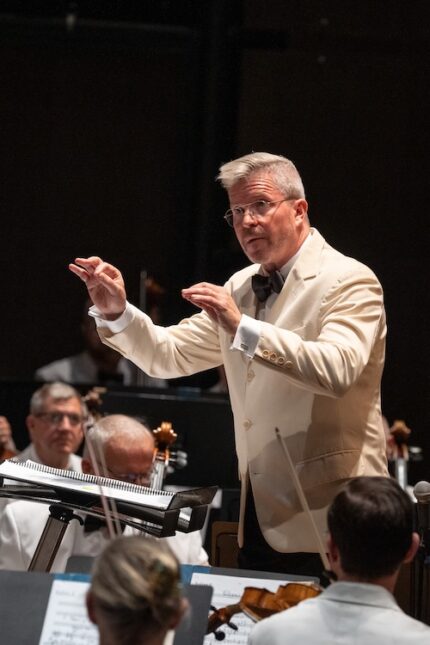
Those qualities were reflected in the tempting musical fare prepared by guest conductor Edwin Outwater, a regular and welcome visitor to Chicago podiums. An articulate tour guide in his spoken introductions, he paced the performances smartly—drawing whistle-clean playing from an ensemble famous for tackling unfamiliar repertory head-on. The theater’s lucid acoustic tied a bow—make that rainbow—on the occasion.
Outwater began the musical celebration with Loud (2023), a short piece he commissioned from the Peruvian-born American composer Jimmy López, perhaps best-known to Chicago audiences for his 2015 opera Bel Canto at Lyric Opera. Outwater commissioned the energetic curtain-raiser for the San Francisco Conservatory of Music, of which he is music director. True to its title, the eight-minute opus celebrates the impact of collectively raised LGBT voices with driving, full-orchestra momentum, well realized at this GPMF debut.
Then it was on to another festival premiere, that of Lou Harrison’s Symphony No. 2 (“Elegiac”).The composer (a fearless gay-rights advocate well before it was fashionable) was one of American music’s most important mavericks of the last century—one whose pioneering works are too seldom heard today.
Partly reworked from music he wrote earlier in his career, the five movements of his 1975 symphony display his distinctive, West-meets-East eclecticism across a broadly colorful instrumental spectrum clearly meant to evoke, at times, the exotic sounds of the Javanese gamelan.
Melodic, accessible, full of contrapuntal ingenuity and striking instrumental solos (note the intertwined double basses in the third movement), the Second Symphony is the sort of borderline-obscure American masterpiece the nation’s elite orchestras should be investigating, but seldom do. Ideal summer festival fare, in other words.
Hats off, then, to Outwater and the Grant Parkers for introducing us to this music with such commitment and panache. Conducting sans baton, the guest maestro traced the gentle lyricism of the surrounding movements just as deftly as he illuminated the angry atonalism of the section titled “Praises for Michael the Archangel.”
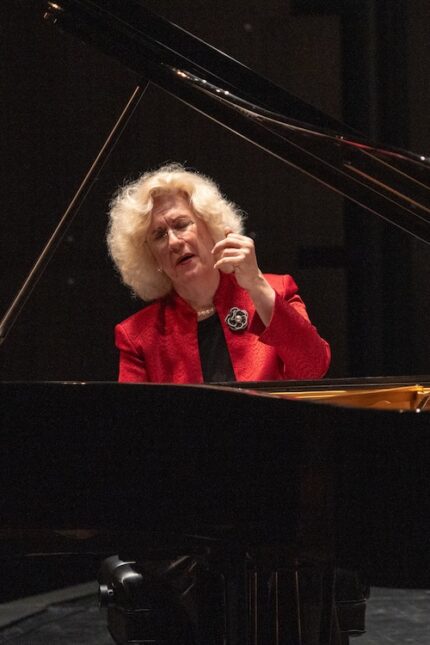
A brief novelty, Amy Woodforde-Finden’s Kashmiri Song, preceded the big Romantic warhorse of the evening, Tchaikovsky’s Piano Concerto No. 1, played to the roaring hilt by soloist Sara Davis Buechner.
A once wildly popular piece of Edwardian-era orientalism, Kashmiri Song (1902)—with its coded sapphic subtext—is all that we ever hear of the British composer’s parlor ditties. Heard here in a lush arrangement by Carmen Dragon, the piece provided a nifty segue to the Tchaikovsky concerto.
From the thunderous chords that usher in the big tune of Tchaikovsky’s opening movement, through the tender cantabile of the central Andantino semplice, to the propulsive brilliance of the folklike finale, Buechner was in her virtuosic element. Even in pages where Tchaikovsky throws every imaginable technical hurdle at the pianist’s ten mortal fingers, Buechner remained unflappable.
A few piano notes fell by the wayside, but, together with Outwater’s sympathetic accompaniment, the soloist summoned ample leonine power without reducing the Yamaha concert grand to a smoldering ruin. The central Andantino was pure Tchaikovskyan poetry.
Buechner answered the vociferous ovations with a solo encore of her own creation—a lovely, Latin-flavored lullaby, Canción para dos niñas.
The program will be repeated 7:30 p.m. Saturday in the Harris Theater. grantparkmusicfestival.org
Posted in Uncategorized
Leave a Comment
 Subscribe via RSS.