Rivera opens Chicago Chorale’s 25th season with a varied, successful program
The Chicago Chorale’s 25th anniversary season is one of transition. Founder and longtime artistic director Bruce Tammen retired last spring, and in the chorus’s 2026-27 season, three finalists are helming programs in what amounts to a round of final auditions for the post.
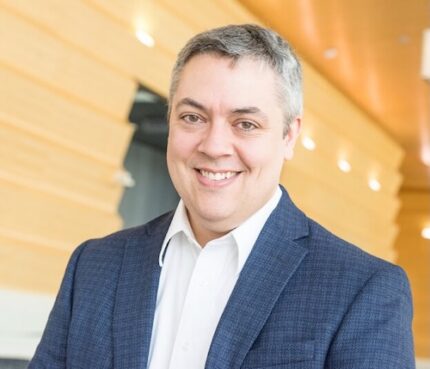
First up was Benjamin Rivera who led the Chorale Sunday afternoon at Hyde Park Union Church. And it’s fair to say that after this concert the other two candidates have their work cut out for them.
Rivera is a familiar presence on Chicago’s concert scene as a longtime singer and guest choir director. The Beverly resident currently holds chorus master posts with the Fort Wayne Philharmonic, Florentine Opera in Milwaukee and Church of the Ascension in Chicago.
Rivera devised a concise yet intelligent and deftly varied program centered on King David as the “lyrical anchor” of the psalm-centered program with a rare Leonard Bernstein work as the finale. He also wrote the informative program notes, which provided a user-friendly guide through some unfamiliar music.
From the opening bars of Salamone Rossi’s Halleluyah, ashrei ish, Rivera elicited a polished, ardent and tightly unified sound from the amateur chorus that was a striking upgrade from their last performance.
Rivera drew an array of dynamic and expressive detailing in Brahms’ Schaffe in mir, Gott, with skillful blending and gleaming sopranos in music that could have been a castoff from his German Requiem. The singers showed their versatility in Judith Weir’s challenging Like as the Hart with Rivera charting the segue from unsettled melancholy to confident spirituality.
The centerpiece of the program was a triptych with two settings of When David Heard (which also provided the program’s title). Thomas Tomkins’s 1612 setting sounded bracingly modern with its overlapping lines, restless key shifting and aura of subdued tragedy. The Chorale singers delivered an admirable rendering of this consolatory setting, somewhat marred by hissy sibilants.
In the ensuing performance of Patricia Van Ness’s Psalm 70: Be Pleased to Deliver Me the singers maintained impressive control and intonation even in the hushed, exposed pianissimos.
Eric Whitacre’s setting of When David Heard is cast on a large scale, spanning a quarter of an hour and nearly operatic in its emotional force and expressive depth. A shaky tenor solo apart, Rivera led the Chorale members in an extraordinarily powerful and moving performance.
Rivera fluently directed the ebb and flow of the varied sections of Whitacre’s large canvas and the Chorale’s 65 singers were at their finest with striking polish, blending and immaculate intonation in the most demanding hushed passages. An extended and well-deserved ovation followed. If Rivera gets hired for this position, it will be in no small part due to this Whitacre performance.
Charles Villiers Stanford’s Beati quorum via offered a flowing and attractive miniature and Jake Runestad’s lovely I will lift up mine eyes received a warm and expressive performance.
Leonard Bernstein wrote two masses. The best known is his MASS of 1971, an overblown theatrical work with fleeting moments of inspiration alternating with extended sections of banality.
Although lesser known— and much shorter at 11 minutes—Bernstein’s Missa brevis is the far better piece. Conductor Robert Shaw suggested in the 1950s that Bernstein create a short mass from the incidental choral music he composed for a staging of Jean Anouilh’s play The Lark. Bernstein presented his colleague with the score—one of Bernstein’s final works—33 years later upon Shaw’s retirement.
Bernstein’s Missa brevis made a fine closer to the Chorale’s concert. Rivera directed a flowing performance that underlined the sacred inspiration while also spotlighting the quirky “Lenny” touches—the jaunty swing of the Benedictus, the rhythmic insistence of the Dona nobis pacem and the syncopated kick of the concluding Alleluias.
The Chorale singers gave Bernstein’s mini-mass energetic advocacy with countertenor Scott Bass a fine and clear-voiced soloist throughout. Rivera elected to perform the Missa brevis with the optional percussion parts, and the clamor of dueling chimes, played by Charley Gillette and Alex Chao, added immeasurably to the impact of the performance.
__________
Sunday’s audience was unusually noisy and restive, the distractions unaided by at least two infants that were brought by indulgent mothers, and allowed admittance.
Sorry, but a public concert is not a church service, and the audience and musicians shouldn’t have to put up with noise disturbances and the potential ruination of a performance because you don’t want to pay for a babysitter.
The Chicago Chorale would do well to institute a clear policy on this front for future concerts.
Maurice Boyer leads the Chicago Chorale in a program titled “Spherical Madrigals” 3 p.m. February 28 at Hyde Park Union Church. chicagochorale.org
Posted in Performances
Leave a Comment
 Subscribe via RSS.