Climate-minded work makes worthy debut at Grant Park Music Festival
Conductor Nicole Paiement made an impressive Chicago debut in 2019 leading the Lyric Opera premiere of Jack Heggie’s Dead Man Walking. Founder and artistic director of the San Francisco-based company Opera Parallèle, Paiement has built a substantial reputation as an interpreter of contemporary opera, and her fluency with 21st-century music was on full display as she took her first podium turn with the Grant Park Orchestra on Wednesday night at Millennium Park.
The centerpiece of Wednesday’s program was composer Mark Adamo’s Last Year, a 2019 concertante work for cello and orchestra that retools Vivaldi’s Four Seasons to integrate the modern threats of climate change. Scored for solo cello and string orchestra plus piano, harp, and percussion, Adamo’s 25-minute score effectively conveys its Baroque point of departure while evocatively updating its idioms to the present day.
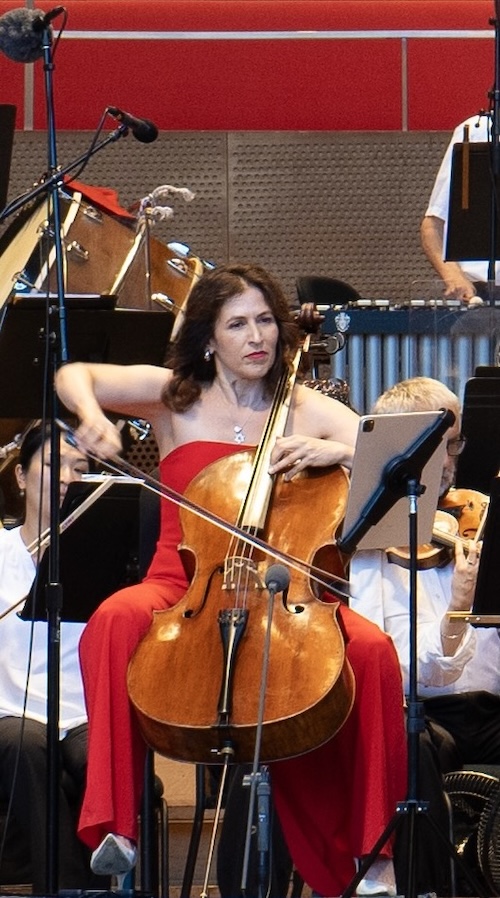
Wednesday’s soloist was Inbal Segev, a prodigy who grew up in Israel and is a Grant Park Music Festival artist-in-residence this summer. Segev had the full measure of Adamo’s work, projecting its shifting moods and general sense of unease. In the opening “Autumn: Dismissing Eunice,” which depicts the rejection of 19th-century’s climatologist Eunice Newton Foote’s work, Segev created an air of agitated conflict with moments of lyrical respite, with clangorous punctuation from the orchestral piano and percussion.
The ensuing three movements of Last Year run without pause. In “Winter: Le triangle noir,” inspired by a weeks-long 1998 blackout in Montreal following an ice storm, Segev gave rhapsodic flight to Adamo’s searching lines, capturing the involuntary nocturnal atmosphere. “Spring: Zephaniah 1: 14-15,” foretells a coming day of judgment, and Segev soared over the ominous orchestral texture with a melody of cinematic sweep. The concluding “Summer: For Julia, born 2045” paints a coming wasteland, with only the sound of seagulls—rendered by Segev’s perfectly floating cello harmonics—heard over a desolate landscape. Here as throughout Segev was an assertive advocate for Adamo’s intricate canvas.
Paiement and the Grant Park players provided supple support to Segev’s virtuosity, all collectively attuned to the nuances and pacing of Adamo’s score. The appreciative composer was on hand to join in the robust applause.
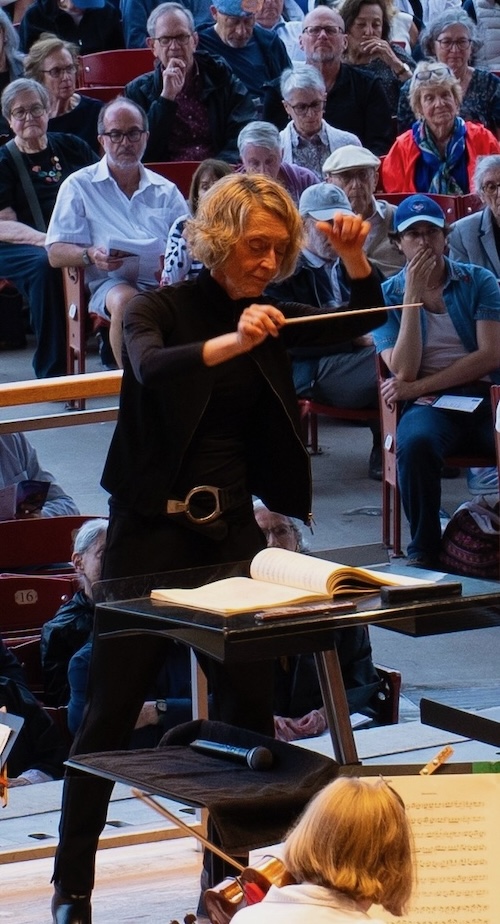
Nature was the program’s unifying theme and its bookends both depicted bodies of water. The clammy downtown night began with Smetana’s “The Moldau” from Má Vlast, which follows the progression of Prague’s famous river through the city. Paiement led a rather sleepy account of Smetana’s most famous work (its opening bars are etched on his grave in Prague), with its more delicate episodes overly direct and even the tempests largely monochrome. Given the complexities of the Adamo, it is easy to imagine this evergreen work getting the short end of rehearsal time.
Paiement led a much more convincing reading of Debussy’s La Mer to close the night. “From Dawn to Noon on the Sea” began in rumbling aquatic depths ultimately brightening into Turner-esque shimmers. “The Play of the Waves” danced coquettishly, with the Grant Park principal players fluently tossing its fragmented themes among themselves over skipping strings.
Paiement drew menacing snarls from the Grant Park cellos to begin “Dialogue of the Wind and Sea,” and while its storminess was fitfully understated as well, time truly stood still in the ethereal melody for unison flute and oboe, before Paiement brought the night to a close with Debussy’s final rushing gale.
Anthony Parnther conducts the Grant Park Orchestra & Chorus in Bruckner’s Psalm 150, Margaret Allison Bonds’ Credo, and Brahms Symphony No. 2 with soloists Janai Brugger and Sankara Harouna, 6:30 p.m. Thursday and Friday. grantparkmusicfestival.com
Posted in Performances
Leave a Comment
 Subscribe via RSS.