Top Ten Performances of 2025
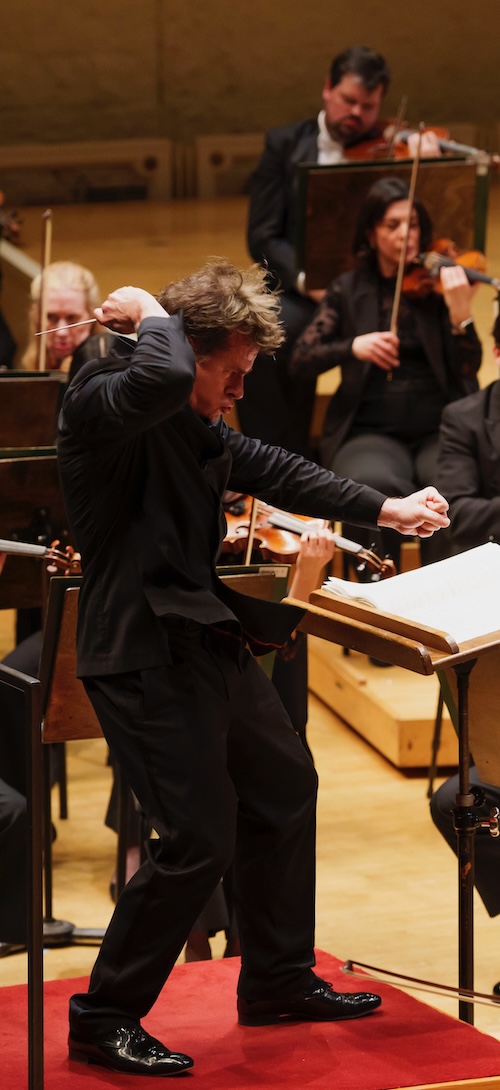
1. Shostakovich: Symphony No. 11. Jakub Hrůša/Chicago Symphony Orchestra
Jakub Hrůša led the Chicago Symphony Orchestra in a revelatory performance of Dmitri Shostakovich’s Symphony No. 11 “The Year 1905” in March that swept away any notion that this is one of the Russian composer’s Party dues-paying tub-thumpers.
From the opening bars, Hrůša and the CSO attacked the score with a laser-like focus and alarming intensity that didn’t let up for the 63-minute duration. Hrůša revealed the Eleventh—written to mark the “first” Russian Revolution of 1905—as a work of hidden layers with a complexity rarely unearthed even by seasoned Shostakovich interpreters. The violence of the mechanistic climaxes was overwhelming, as with the grinding ferocity of the second movement, with screaming piccolos, timpani, brass, and five percussionists building to a terrifying climax. Yet the performance balanced the desolation with passages of affecting humanity such as the quelling effect of a forlorn English horn. The symphony closed on a metallic chord with chimes fading away to an ambivalent silence, which felt like the opposite of triumphant.
Hrůša and the CSO made a powerful and eloquent case for the Eleventh Symphony as one of Shostakovich’s finest works—as well as bolstering the view of several Shostakovich scholars and contemporaries that the Eleventh is as much about the enemy within in the 1950s as the enemy without a half-century earlier. Shattering and unforgettable.
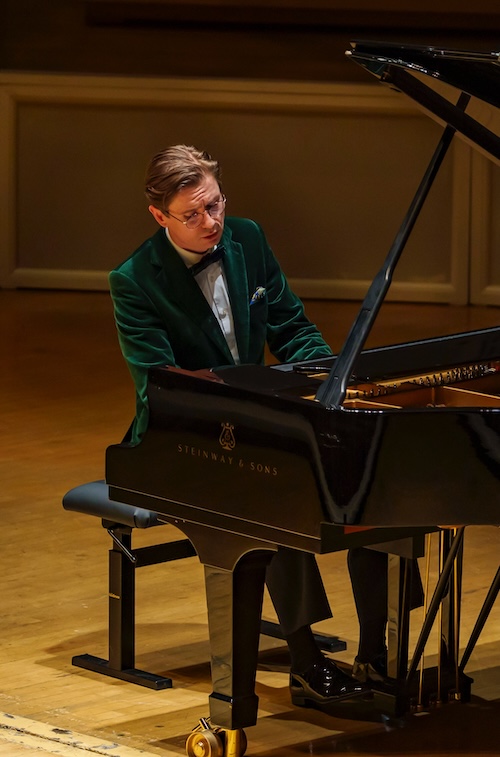
2. Víkingur Ólafsson. Music of Bach, Beethoven and Schubert
Víkingur Ólafsson’s appearances have become must-see events in Chicago and the Icelandic pianist’s June recital was no exception. Playing the 90-minute program straight through with barely a pause between works, Ólafsson drew acute drama and explored a remarkable array of luminous, finely shaded expression in Bach’s Partita No. 6, two late Beethoven sonatas and Schubert’s Sonata in E minor. Sonic poetry from one of the finest keyboard artists of our day, with otherworldly Bach and Rameau encores. (Much of this program is available on Ólafsson’s most recent DG recording.)
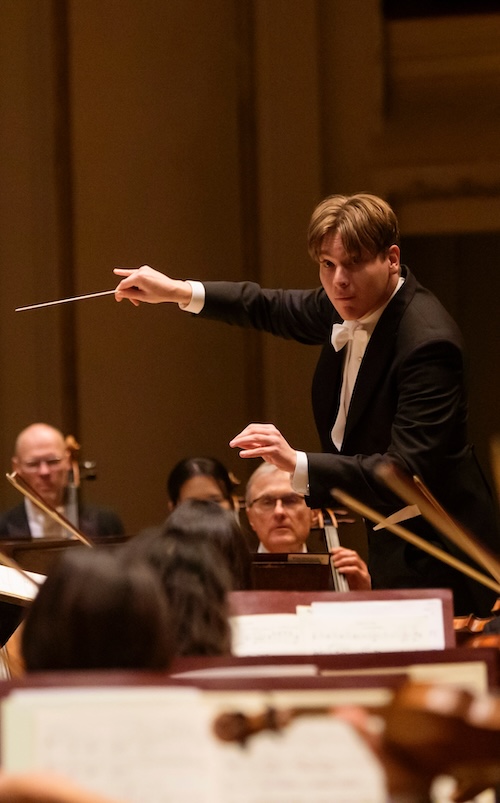
3. Music of Beethoven, Schumann, Chin, and Widmann. Klaus Mäkelä/Chicago Symphony Orchestra
With the gradual ramping up of his local appearances, Klaus Mäkelä provided several highlights this year with the Chicago Symphony Orchestra, including Mahler’s epic Symphony No. 3 and a richly idiomatic Dvořák Seventh Symphony.
But one week before Christmas in the final CSO program of the year, the orchestra’s music director designate really seemed to come into his own as their new leader—as well as establishing a bond with local audiences.
The evening’s performance of Beethoven’s Symphony No. 7 was—no surprise—spirited, refined and idiomatic. But, most significantly, the concert gave the first real indication of Mäkelä’s intelligent, envelope-pushing programming. The Finnish conductor prefaced the symphony with contemporary Beethoven-inspired works by Unsuk Chin and Jörg Widmann, which were both given exhilarating performances. The CSO musicians sounded unleashed in these edgy, roiling works—their combustible playing under Mäkelä’s energetic direction akin to a Lamborghini that was finally taken out on the highway and given a chance to show what it could do after being kept too long in the garage.
Yunchan Lim’s lithe account of the Schumann Piano Concerto—and his poetic Chopin encore—were icing on this holiday cake.
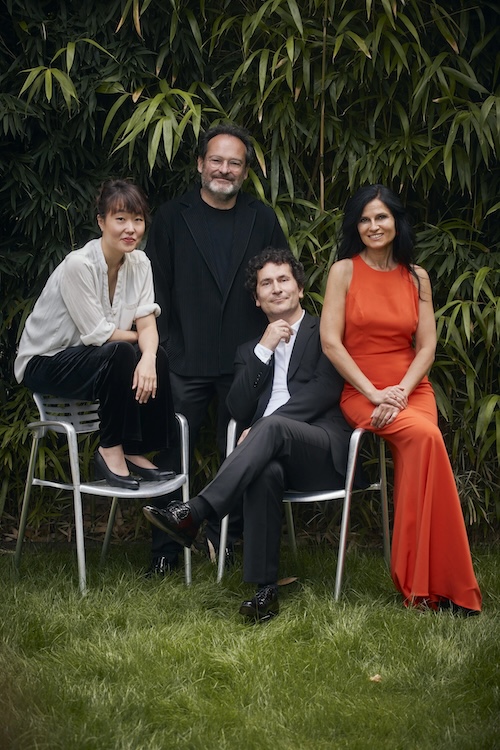
4. Belcea Quartet. Music of Mozart, Beethoven and Mendelssohn. UChicago Presents.
The Belcea Quartet returned to Mandel Hall in October and reminded local audiences why—in their 31st season—the ensemble remains among the finest chamber groups in the world. Barely affected by the venue’s hothouse temperature, the quartet, led immaculately by first violinist Corina Belcea, brought thrilling virtuosity, seamless ensemble and remarkable insight to music of Mozart, Beethoven and Mendelssohn. In the slow movement of Beethoven’s final Quartet in F major, their playing was suffused with a sense of elevated repose that was both musically apt and raptly beautiful.
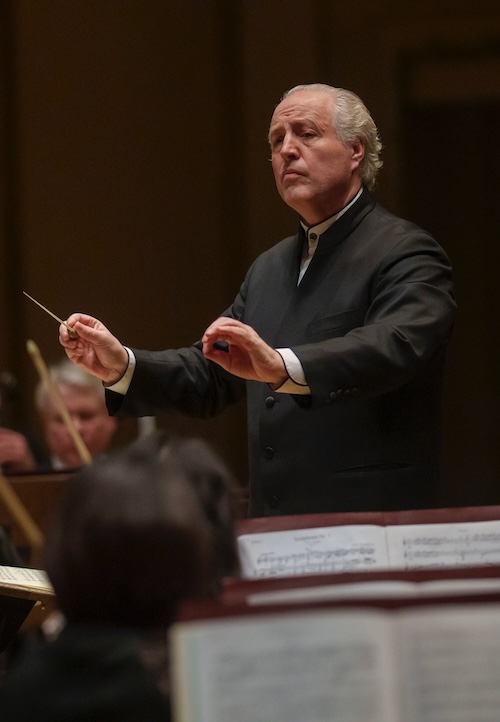
5. Music of Beethoven, Haydn and Macmillan. Manfred Honeck/Chicago Symphony Orchestra and Chorus
Manfred Honeck’s CSO weeks continue to provide consistent highlights every year. This fall the Austrian conductor brought a thoughtful realization of Mozart’s Requiem but better still was his May program with a fresh-as-paint Beethoven First Symphony and a soaring performance of Haydn’s Mass in Time of War in its belated CSO debut.
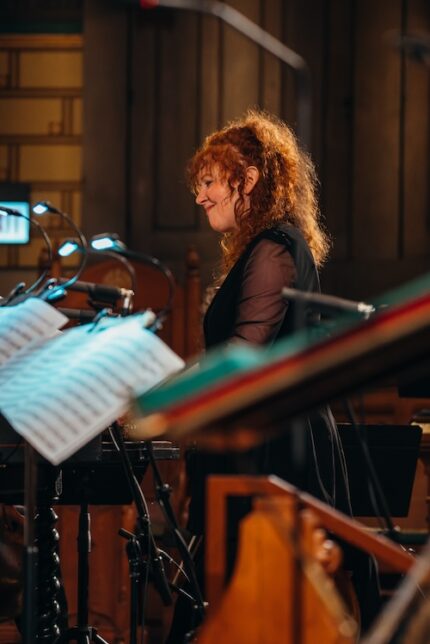
6. Bach: Mass in B minor. Jeannette Sorrell/Apollo’s Fire
Apollo’s Fire gave a luminous account of the Bach Mass in B Minor at St. James Cathedral at the start of the Easter season, a highlight of the ensemble’s five-year presence in Chicago. Music director Jeannette Sorrell led a performance imbued with spiritual grace and gravitas that had the full measure of Bach’s transcendent statement of belief. (Tim Sawyier)
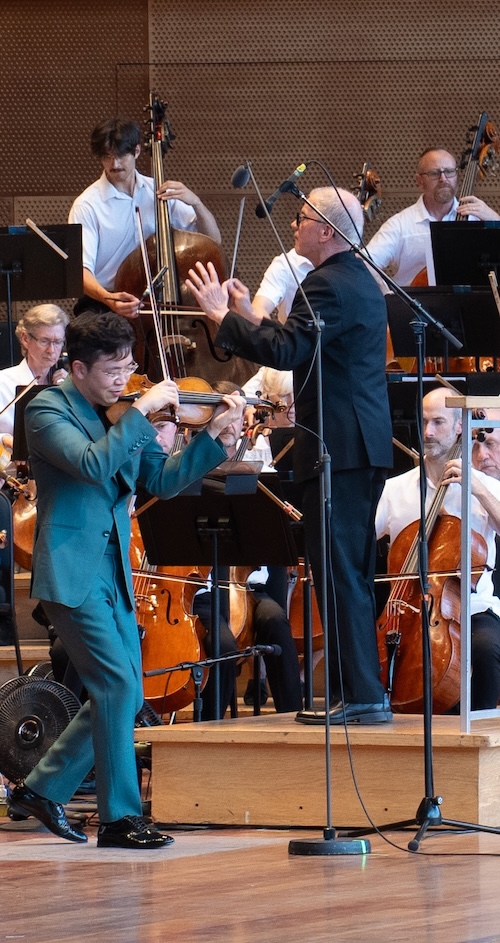
7. Beethoven: Symphony No. 6; Bruch Scottish Fantasy. Osmo Vänskä/Grant Park Orchestra with Paul Huang
2025 was a transitional year at the Grant Park Music Festival with the lakefront summer series making a graceful segue from Carlos Kalmar to new principal conductor Giancarlo Guerrero who showed he is the real thing and worthy of the position.
Yet the finest lakefront evening this summer was provided by Osmo Vänskä in his belated Grant Park debut. The Finnish conductor led a fresh and vividly characterized account of Beethoven’s “Pastorale” symphony with delightful bird calls, vigorous dancing peasants and a finale of glowing beneficence. Violinist Paul Huang’s solo playing in Max Bruch’s Scottish Fantasy on the first half ideally blended lyric poetry and virtuosic panache.
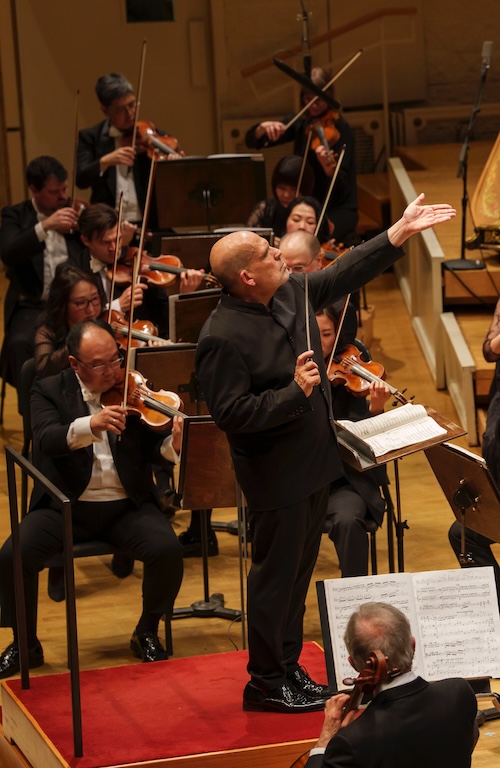
8. Mahler: Symphony No. 6. Jaap van Zweden/Chicago Symphony Orchestra
In prep performances for the CSO’s spring European tour, Jaap van Zweden evinced little sympathy for Mahler’s Seventh but was manifestly in synch with the bleak tragedy of the composer’s Symphony No. 6. In a work he has enjoyed success with on previous occasions with the orchestra, van Zweden’s May performance topped them all, a devastating experience with some of the CSO’s most grippingly intense playing of the year.
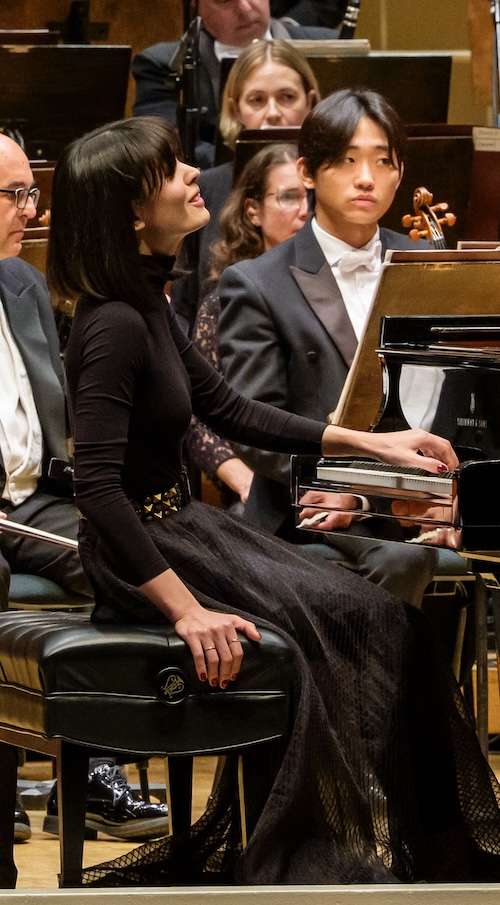
9. Ravel: Piano Concertos. Alice Sara Ott. Mikko Franck/ Chicago Symphony Orchestra
Alice Sara Ott provided the finest local tribute to Maurice Ravel in his 150th birthday year, tackling both of the French composer’s piano concertos in a single evening with the CSO in September. The pianist showed herself a first-class Ravelian—playing with lean power and limpid unsentimentality in the Concerto for Left Hand and unfolding the long-breathed solo in the Adagio of the G-Major Concerto with spare, unadorned simplicity.

10. Music of Charles Ives. Mei-Ann Chen/Chicago Sinfonietta
The Chicago Sinfonietta deserves kudos for marking the 150th birthday of American great Charles Ives with their February tribute at Mandel Hall, more acknowledgement than the composer received from any other local organization in this anniversary season. Ives’ Symphony No. 2 highlighted the thoughtful and informative program, with music director Mei-Ann Chen leading an accomplished rendition of a work almost bafflingly ahead of its time. (Tim Sawyier)
Honorable Mentions
Klaus Mäkelä led a performance of Dvořák’s Seventh Symphony in May that put across the lean toughness of the outer movements, balancing the taut drama with Bohemian local color. Rarely will one hear Dvořák’s gracious lyricism blossom so winningly as it did with the CSO woodwinds in this performance.
Music of the Baroque’s 2025 highlights came, not insignificantly, with rarities, which were bolstered by excellent guest singers: the Nicholas Kraemer-led performance of Handel’s oratorio Theodora in March, and Gluck’s Orfeo in September, conducted by Jane Glover.
Other musical highlights included Seong-Jin Cho’s staggering performance of Prokofiev’s Second Piano Concerto with CSO; Jeremy Black in the Mendelssohn Violin Concerto and conductor Joseph Young’s Hanson Second Symphony, both with the Grant Park Orchestra. The sportive duo of Leonidas Kavakos & Daniil Trifonov in music of Beethoven, Poulenc, Bartok and Brahms. And Jean-Yves Thibaudet’s lucid virtuosity in Debussy’s complete Preludes in January.
Two opera highlights of 2025 came from Chicago’s smaller companies in a pair of local premieres: Jacopo Peri’s Euridice in a collaboration by Haymarket Opera and Newberry Consort, and Chicago Opera Theater with Antonio Salieri’s Falstaff. (John von Rhein)
Reprise of a Rachmaninoff Rarity
In his final season leading the Chicago Chorale, founder and artistic director Bruce Tammen reprised Rachmaninoff’s All-Night Vigil in a moving and insightful performance.
Mahler First, Take 1
Giancarlo Guerrero led the Grant Park Orchestra in the original version of Gustav Mahler’s Symphony No. 1, offering a rare and fascinating opportunity to hear this cornerstone work with the inclusion of “Blumine,” the slow movement Mahler later excised.
Worst Opera
No contest here. Missy Mazzoli’s The Listeners, which opened at Lyric Opera in March, proved a turkey for the ages, with a potentially intriguing sci-fi-esque scenario undone by Lifetime Channel domestic cliches and a stupefyingly dumb libretto by the overrated Royce Vavrek.
Worst Government Decision (music division)
Granted, the Chicago and Illinois politicians and judges who happily allow repeat violent criminals out on the streets to commit mayhem and worse is an issue of more immediate and pressing concern.
But from a musical standpoint, one cannot beat the bozos at Chicago’s Office of Emergency Management for peremptorily cancelling the final concert of the Grant Park Music Festival in August. The OEM made a clueless decision to call off the evening’s repeat performance of Carmina Burana way too early for a potential storm that never materialized. The skies were clear by concert time, leaving thousands of audience members disappointed and making an anti-climactic coda to Giancarlo Guerrero’s first season at the helm.
Guys, the idea is to get the concert in—not to cancel it as early as possible so you can go home.
Best Advocacy for New Music
In its third iteration, the Ear Taxi Festival offered a remarkable, even bewildering number of events in October: 507 musicians performing works by 210 composers including 71 world premieres. Kudos to festival leaders Tim Corpus, LaRob K. Rafael and Amy Wurtz for their efforts on behalf of new music in Chicago.
Best Premiere
Apart from the Ear Taxi Festival, there weren’t many world premieres to choose from in 2025 but Matthew Aucoin’s Song of the Reappeared with the CSO in December managed to be powerful, well-crafted, deeply felt, and of the moment.
Second Best Premiere
French composer Camille Pépin packed a lot into her Les Eaux célestes, a compelling nine-minute work where French impressionism meets early John Adams, given glowing and nimble advocacy by Mikko Franck and the CSO.
Best Singer Debut
Lyric Opera showed evidence of returning to respectable life this fall with strong performances of Medea and Cav & Pag, even though the former was let down by weak conducting and the double-bill by uneven casting.
The most striking element was the Chicago debut of SeokJong Baek in Mascagni’s Cavalleria Rusticana. The Korean tenor may not be the most compelling of actors but, as the doomed Turiddu, Baek cut loose with the kind of heroic tone and full-blooded vocalism one rarely hears these days, at least in Chicago.
A Wandering Violist
Antoine Tamestit took the wandering title hero of Berlioz’s Harold in Italy literally in October. The French violist sauntered around the CSO musicians on stage while he performed as soloist in Berlioz’s oddball quasi-concerto led by Klaus Mäkelä—a hybrid of concert music and theatrical presentation that worked surprisingly well.
A good autumn for autumnal Brahms
Under guest conductors Phillipe Jordan and Petr Popelka, the CSO served up fresh and rewarding performances of Brahms’ Second and Third symphonies, respectively.
Adieu Jay Friedman et al

The Chicago Symphony Orchestra is going through a transitional era, not just on the podium but in the ensemble with many open positions that incoming Klaus Mäkelä has filled or will be tasked with doing so.
Among the CSO musicians departing in 2025 is trombonist Jay Friedman, who retired in August. A Chicago native, Friedman joined the CSO in 1962 as assistant principal trombone, appointed by Fritz Reiner. Three years later, Jean Martinon promoted him to principal trombone, a position in which he performed with remarkable consistency, rich sonority and musical distinction for 63 years.
Friedman soloed many times with the CSO including works by American composers such as Ernest Bloch’s Symphony for Trombone and Orchestra and Paul Creston’s Fantasy for Trombone and Orchestra In 1991, Friedman gave the world premiere of Ellen Taafe Zwilich’s Trombone Concerto, a work written for him.
Friedman is also a conductor and he will continue to lead concerts with the Orchestra of Oak Park and River Forest, the west suburban ensemble where he has been music director for the past 30 years.
Other CSO musicians retiring this year were trumpet Mark Ridenour (31 seasons), violinist Joyce Noh (46 seasons), and harpist Lynne Turner (67 seasons).
Posted in Articles
Leave a Comment
 Subscribe via RSS.